No edit summary |
No edit summary |
||
| (18 intermediate revisions by the same user not shown) | |||
| Line 1: | Line 1: | ||
{{LivingLab | {{LivingLab | ||
|name=Utrecht | |name=Utrecht | ||
|country=Netherlands | |country=The Netherlands | ||
|city=Utrecht | |city=Utrecht | ||
|neighbourhood= | |neighbourhood=Overvecht | ||
|begin-date= | |begin-date=2024-01-01 | ||
|end-date=2026- | |end-date=2026-12-31 | ||
|participating-organizations=Municipality of Utrecht | |participating-organizations=Municipality of Utrecht; Cargoroo by Moby; University of Twente; University of Applied Sciences Utrecht; TIER/Dott; Fietsersbond; ROCMN | ||
|location=52. | |location=52.11612, 5.10398 | ||
|description=A | |description=The Utrecht Living Lab explores how shared cargo bikes can become an affordable and accessible alternative to private car use in Overvecht, a spacious and relatively green post-war neighbourhood (Gemeente Utrecht, 2025) where 28% of households live on an income up to 125% of the statutory social minimum, twice the citywide share (Gemeente Utrecht, Onderzoek & Advies, 2026). It examines whether reduced user tariffs lead to greater uptake and develops a cooperative, neighbourhood-based business model as an alternative to purely commercial operation. A further objective is to design a solar-powered charging station that charges cargo bikes where they are parked, reducing operating costs and using renewable energy for shared mobility. | ||
| | |focus=For the Utrecht Living Lab, the key question was how shared micromobility can become a realistic and affordable option for a broader range of residents in the outskirts of Utrecht. The question is pressing because the Municipality of Utrecht is gradually introducing paid on-street parking across the city, including in Overvecht, with citywide implementation planned by 2034. The policy aims to encourage alternatives to private car use and to free up public space for walking, cycling, shared mobility and greenery (Gemeente Utrecht, n.d.-c). In Overvecht, where financial constraints are more common, the cost of commercial shared-mobility services can be a significant barrier for households looking for an alternative to the private car. The Living Lab therefore focused on whether lowering the cost of shared cargo bikes under a commercial model, together with alternative ways of organising and operating the service through a cooperative model, could make shared mobility more accessible and attractive to residents who might otherwise be less likely to use it. | ||
| | |approach=Three complementary interventions were developed. First, the Living Lab explored whether a cooperative, neighbourhood-based social business model could provide an alternative to a purely commercial shared-mobility model. The model was developed with residents and other local stakeholders. Second, a modular, solar-powered charging station was designed with stakeholders. The concept aimed to enable charging where cargo bikes are parked, thereby reducing operational activities such as collecting or relocating bikes for charging and, in turn, reducing operating costs. It also explored the use of renewable energy for shared mobility. Third, the Municipality of Utrecht introduced reduced tariffs for shared cargo bikes in six Utrecht neighbourhoods, including Overvecht, to investigate whether lower prices lead to greater use (Gemeente Utrecht, n.d.-b). DREAMS analyses data from this tariff pilot to assess the relationship between affordability and uptake. | ||
|interventions=#'''Cargoroo price reduction''': Reduced tariffs for shared cargo bikes implemented in six Utrecht neighbourhoods, including Overvecht, to test whether lower prices increase use (Gemeente Utrecht, n.d.-b).<br>''Partners'': Cargoroo by Moby, Municipality of Utrecht, HU University of Applied Sciences Utrecht | |||
#'''DREAMS shared-cooperative cargo bike social business model''': Cooperative, neighbourhood-based social business model for a station-based shared cargo-bike service, developed with residents and local stakeholders.<br>''Partners'': Municipality of Utrecht, HU University of Applied Sciences Utrecht, several neighbourhood organisations. | |||
|images=UtrechtLL.png/Cover for the Utrecht LL | #'''DREAMS Solar powered charging station''': Modular solar-powered charging concept designed to charge cargo bikes where they are parked, reducing charging-related operational movements and potentially lowering operating costs.<br>''Partners'': HU University of Applied Sciences Utrecht, Cargoroo by Moby, TIER/Dott, STRIM | ||
|what-happened=During implementation, the Utrecht Living Lab had to make substantial changes to its original plans because of developments in the local shared-mobility market. These included TIER’s exit from the Utrecht activities and the bankruptcy of Cargoroo in December 2024 (Nederlandse Omroep Stichting [NOS], 2024). Rather than ending the Living Lab activities, these disruptions prompted the partners to adapt the work and explore alternative business and operational models. | |||
This experience became an important part of the Living Lab itself: it highlighted how strongly shared-mobility experiments can depend on changing market conditions and on the continuity of private operators. The DREAMS shared-cargo-bike social business model was developed in response to challenges encountered in the commercial shared-mobility market. Following the bankruptcy of Cargoroo and the resulting uncertainty about service continuity, the Living Lab explored whether a cooperative, neighbourhood-based model could offer a more locally embedded alternative. | |||
The model considered how residents and local organisations could play a role in operating a station-based shared cargo-bike service, while keeping affordability and long-term viability central. The model was discussed with stakeholders and subsequently informed a subsidy application prepared by the Municipality of Utrecht for possible future implementation. The solar-powered charging-station was developed through collaboration between HU University of Applied Sciences Utrecht, students, vocational-education students (ROCMN) and shared-mobility operators. | |||
The work included technical design, environmental-impact assessment, exploration of the business model and development of a first physical prototype. The operational rationale was to charge cargo bikes at their parking location, reducing the need for operators to collect or relocate bikes for charging and thereby potentially reducing operating costs. The concept was initially explored with TIER/Dott and later continued in relation to Cargoroo by Moby as the local shared-mobility market changed (In mid-2025 the Irish operator Moby acquired Cargoroo's assets and contracts and, together with investor Fairtree Elevant and the Municipality of Utrecht, relaunched the service as Cargoroo by Moby). At the time of writing, the station had not yet been implemented in public space because of delays concerning a suitable site and permissions. The design and prototyping process nevertheless generated practical lessons about the technical, spatial and organisational requirements of local renewable-energy charging for shared mobility. | |||
|learnings=One of the clearest lessons from the Utrecht Living Lab is the importance of flexibility when working with shared-mobility services that depend partly on commercial operators. TIER’s exit and Cargoroo’s bankruptcy required the partners to reconsider planned activities, partnerships and implementation routes. Instead of treating these disruptions only as project setbacks, the Living Lab used them to explore alternative governance, business and operational arrangements. | |||
For practitioners, this suggests that Living Lab plans involving market actors should include room to adapt when providers, permits, business conditions or implementation opportunities change. An additional lesson concerns the relationship between affordability and user uptake. The Municipality of Utrecht’s reduced-tariff pilot explicitly tests whether a lower price leads to greater use of shared cargo bikes (Gemeente Utrecht, n.d.-b). | |||
Experience within the Living Lab indicates, however, that price is only one part of the challenge. Reaching residents who have not previously used shared mobility also requires attention to awareness, trust, practical information and support for first-time use. Stakeholder discussions highlighted the need to understand which communication channels reach different groups, including residents who do not routinely use mobility apps or digital platforms, and what support first-time users need to try a shared cargo bike. | |||
A practical implication is that affordability measures should be combined with targeted communication and locally embedded outreach. Where appropriate, this could include working through community organisations or local ambassadors and providing hands-on support for first-time users. These elements should be tested alongside pricing measures rather than assuming that lower prices alone will generate uptake. | |||
|headline-image=Overvecht.jpg | |||
|headline-image-credit=Ruben Alexander | |||
|images=UtrechtSolarCharging.jpg/Construction of the frame for the solar charging hub by ROC Midden Nederland; | |||
UtrechtDiscussion.png/Resident focus group to discuss the potential of a shared cargo bike system in the neighbourhood; | |||
UtrechtCoCreation.jpg/Co-creation session on cooperative cargo bikes with neighbourhood partners; | |||
SolarPowerChargingHub.png/Design of the solar-powered charging hub; | |||
UtrechtLL.png/Cover for the Utrecht LL | |||
|image-credits=Stephanie Geertman; Maarten Plesman, Sandro Jansen, Fedde Buijs, Cas Ringelberg, Olijf Linssen, Tom Veldkamp | |||
|related-steps=[[Develop vision and strategy with stakeholders|SUMP Step 5: Develop vision and strategy with stakeholders]]<br>[[Set targets and indicators|SUMP Step 6: Set targets and indicators]]<br>[[Prepare for adoption and financing|SUMP Step 9: Prepare for adoption and financing]] | |||
|sources=Gemeente Utrecht. (2025). Omgevingsvisie Overvecht 2040. Gemeente Utrecht. [https://omgevingsvisie.utrecht.nl/gebiedsbeleid/gebiedsbeleid-wijk-overvecht/omgevingsvisie-overvecht]<br> | |||
Gemeente Utrecht. (n.d.-a). Beschrijving van wijk Overvecht. Omgevingsvisie Utrecht. Retrieved September 3, 2026. | |||
[https://omgevingsvisie.utrecht.nl/gebiedsbeleid/gebiedsbeleid-wijk-overvecht/beschrijving-van-wijk-overvecht]<br> | |||
Gemeente Utrecht. (n.d.-b). Deel(bak)fietsen. Retrieved September 3, 2026. | |||
[https://www.utrecht.nl/wonen-en-leven/verkeer/deelvervoer/deelbakfietsen]<br> | |||
Gemeente Utrecht. (n.d.-c). Aanpak invoeren betaald parkeren in de hele stad. Retrieved September 21, 2026. | |||
[https://www.utrecht.nl/wonen-en-leven/parkeren/invoeren-betaald-parkeren]<br> | |||
Gemeente Utrecht, Onderzoek & Advies. (2026). Armoedemonitor: Ontwikkeling lage inkomens. | |||
[https://onderzoek.utrecht.nl/armoedemonitor/2-ontwikkeling-lage-inkomens]<br> | |||
HU University of Applied Sciences Utrecht. (n.d.). DREAMS. Retrieved September 3, 2026. | |||
[https://www.hu.nl/onderzoek/projecten/dreams]<br> | |||
Nederlandse Omroep Stichting. (2024, December 24). Deelbakfietsbedrijf Cargoroo failliet verklaard: ‘Ontzettend jammer’. NOS. [https://nos.nl/artikel/2549556-deelbakfietsbedrijf-cargoroo-failliet-verklaard-ontzettend-jammer] | |||
|accessibility-tool=https://minutemapper-overvecht.up.railway.app/ | |accessibility-tool=https://minutemapper-overvecht.up.railway.app/ | ||
|survey-results=https://dreams.mobyome.at/index.php?title=Special:Radarchart&file=File:ResimobSurvey-Utrecht.csv | |survey-results=https://dreams.mobyome.at/index.php?title=Special:Radarchart&file=File:ResimobSurvey-Utrecht.csv | ||
}} | }} | ||
Latest revision as of 12:53, 5 October 2026
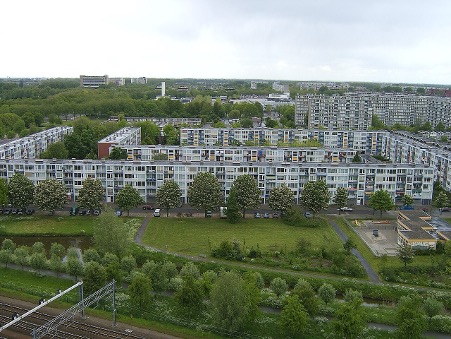
For the Utrecht Living Lab, the key question was how shared micromobility can become a realistic and affordable option for a broader range of residents in the outskirts of Utrecht. The question is pressing because the Municipality of Utrecht is gradually introducing paid on-street parking across the city, including in Overvecht, with citywide implementation planned by 2034. The policy aims to encourage alternatives to private car use and to free up public space for walking, cycling, shared mobility and greenery (Gemeente Utrecht, n.d.-c). In Overvecht, where financial constraints are more common, the cost of commercial shared-mobility services can be a significant barrier for households looking for an alternative to the private car. The Living Lab therefore focused on whether lowering the cost of shared cargo bikes under a commercial model, together with alternative ways of organising and operating the service through a cooperative model, could make shared mobility more accessible and attractive to residents who might otherwise be less likely to use it.
Three complementary interventions were developed. First, the Living Lab explored whether a cooperative, neighbourhood-based social business model could provide an alternative to a purely commercial shared-mobility model. The model was developed with residents and other local stakeholders. Second, a modular, solar-powered charging station was designed with stakeholders. The concept aimed to enable charging where cargo bikes are parked, thereby reducing operational activities such as collecting or relocating bikes for charging and, in turn, reducing operating costs. It also explored the use of renewable energy for shared mobility. Third, the Municipality of Utrecht introduced reduced tariffs for shared cargo bikes in six Utrecht neighbourhoods, including Overvecht, to investigate whether lower prices lead to greater use (Gemeente Utrecht, n.d.-b). DREAMS analyses data from this tariff pilot to assess the relationship between affordability and uptake.
- Cargoroo price reduction: Reduced tariffs for shared cargo bikes implemented in six Utrecht neighbourhoods, including Overvecht, to test whether lower prices increase use (Gemeente Utrecht, n.d.-b).
Partners: Cargoroo by Moby, Municipality of Utrecht, HU University of Applied Sciences Utrecht - DREAMS shared-cooperative cargo bike social business model: Cooperative, neighbourhood-based social business model for a station-based shared cargo-bike service, developed with residents and local stakeholders.
Partners: Municipality of Utrecht, HU University of Applied Sciences Utrecht, several neighbourhood organisations. - DREAMS Solar powered charging station: Modular solar-powered charging concept designed to charge cargo bikes where they are parked, reducing charging-related operational movements and potentially lowering operating costs.
Partners: HU University of Applied Sciences Utrecht, Cargoroo by Moby, TIER/Dott, STRIM
During implementation, the Utrecht Living Lab had to make substantial changes to its original plans because of developments in the local shared-mobility market. These included TIER’s exit from the Utrecht activities and the bankruptcy of Cargoroo in December 2024 (Nederlandse Omroep Stichting [NOS], 2024). Rather than ending the Living Lab activities, these disruptions prompted the partners to adapt the work and explore alternative business and operational models.
This experience became an important part of the Living Lab itself: it highlighted how strongly shared-mobility experiments can depend on changing market conditions and on the continuity of private operators. The DREAMS shared-cargo-bike social business model was developed in response to challenges encountered in the commercial shared-mobility market. Following the bankruptcy of Cargoroo and the resulting uncertainty about service continuity, the Living Lab explored whether a cooperative, neighbourhood-based model could offer a more locally embedded alternative.
The model considered how residents and local organisations could play a role in operating a station-based shared cargo-bike service, while keeping affordability and long-term viability central. The model was discussed with stakeholders and subsequently informed a subsidy application prepared by the Municipality of Utrecht for possible future implementation. The solar-powered charging-station was developed through collaboration between HU University of Applied Sciences Utrecht, students, vocational-education students (ROCMN) and shared-mobility operators.
The work included technical design, environmental-impact assessment, exploration of the business model and development of a first physical prototype. The operational rationale was to charge cargo bikes at their parking location, reducing the need for operators to collect or relocate bikes for charging and thereby potentially reducing operating costs. The concept was initially explored with TIER/Dott and later continued in relation to Cargoroo by Moby as the local shared-mobility market changed (In mid-2025 the Irish operator Moby acquired Cargoroo's assets and contracts and, together with investor Fairtree Elevant and the Municipality of Utrecht, relaunched the service as Cargoroo by Moby). At the time of writing, the station had not yet been implemented in public space because of delays concerning a suitable site and permissions. The design and prototyping process nevertheless generated practical lessons about the technical, spatial and organisational requirements of local renewable-energy charging for shared mobility.
One of the clearest lessons from the Utrecht Living Lab is the importance of flexibility when working with shared-mobility services that depend partly on commercial operators. TIER’s exit and Cargoroo’s bankruptcy required the partners to reconsider planned activities, partnerships and implementation routes. Instead of treating these disruptions only as project setbacks, the Living Lab used them to explore alternative governance, business and operational arrangements.
For practitioners, this suggests that Living Lab plans involving market actors should include room to adapt when providers, permits, business conditions or implementation opportunities change. An additional lesson concerns the relationship between affordability and user uptake. The Municipality of Utrecht’s reduced-tariff pilot explicitly tests whether a lower price leads to greater use of shared cargo bikes (Gemeente Utrecht, n.d.-b).
Experience within the Living Lab indicates, however, that price is only one part of the challenge. Reaching residents who have not previously used shared mobility also requires attention to awareness, trust, practical information and support for first-time use. Stakeholder discussions highlighted the need to understand which communication channels reach different groups, including residents who do not routinely use mobility apps or digital platforms, and what support first-time users need to try a shared cargo bike.
A practical implication is that affordability measures should be combined with targeted communication and locally embedded outreach. Where appropriate, this could include working through community organisations or local ambassadors and providing hands-on support for first-time users. These elements should be tested alongside pricing measures rather than assuming that lower prices alone will generate uptake.


SUMP Step 6: Set targets and indicators
SUMP Step 9: Prepare for adoption and financing
Gemeente Utrecht. (n.d.-a). Beschrijving van wijk Overvecht. Omgevingsvisie Utrecht. Retrieved September 3, 2026.
[2]
Gemeente Utrecht. (n.d.-b). Deel(bak)fietsen. Retrieved September 3, 2026.
[3]
Gemeente Utrecht. (n.d.-c). Aanpak invoeren betaald parkeren in de hele stad. Retrieved September 21, 2026.
[4]
Gemeente Utrecht, Onderzoek & Advies. (2026). Armoedemonitor: Ontwikkeling lage inkomens.
[5]
HU University of Applied Sciences Utrecht. (n.d.). DREAMS. Retrieved September 3, 2026.
[6]